Monday, August 1, 2016

FAREWELL SPEECHES

Saying goodbye graciously


Farewell speeches mark significant departures. They are much more than a casual "see you later" and a mumbled "thanks for everything".
A planned goodbye speech crystallizes the moment of leaving, giving it focus, form, dignity and provides an opportunity to publicly acknowledge appreciation and gratitude graciously.
They are most frequently expected when leaving a current job to take another and are given by the person leaving or to that person by a colleague, manager or boss.
Other situations calling for farewell speeches are graduations (leaving a school, a class...), retirements or perhaps when a long-time member of your club or neighborhood departs. A funeral speech or eulogy is yet another form of a goodbye or farewell speech.

Hallmarks of gracious farewell speeches


sincerity - expresses genuinely felt feelings
positivity - dwells on the positive: acknowledges good outcomes, projects and events without undue exaggeration, expresses hopes for the future
brevity - succinct and concise minus padding or waffle
Content ideas for a leaver's going away speech
A brief summary of involvement eg. how long you've been with the company, club etc
What you have enjoyed, admired or appreciated about the workplace, job, neighborhood, club
The admiration and appreciation you have for the people - their qualities/skills
What you feel about leaving
Your gratitude and thanks for support, opportunities to learn, friendship...
Special memories or good humored anecdotes
Your reasons for leaving
What, or where, you are going to
Hopes and good wishes for those remaining
Content ideas for a farewell speech given to a leaver:
What you have sincerely enjoyed, admired or appreciated about the leaver's contribution to the workplace, club, neighborhood ...
eg. their role in X project, their organizational skills, the chocolate cake they made for special occasions ...
A story or two illustrating the positive qualities of the person leaving
How their departure will impact on those left behind
Good wishes for the future
Presentation of gift on behalf of company.

Writing and delivering your speech


The easiest way to take your content ideas and turn them into a speech is to use an outline. 
The speech outline covers the main points you want to make in the order you want to make them. Once you've filled it out, test by saying it out loud.
Listen for the flow of information.
Is it ordered?
Does each idea link logically?
Are the transitions clear?
Is there a beginning (introduction), body (middle) and conclusion?
Is the content, tone and language use right for the occasion and your intended audience?
Time the speech. Is it too long? Edit if necessary.
And say your speech to a trusted friend or colleague before giving it on the day. This is a safety precaution to ensure that you haven't left out anything that should be there or put in anything that shouldn't!

3 ways to deliver your prepared farewell speech


Choose what best suits you and the occasion.

1. Read your speech
If the situation is very emotional or you are very emotional this may be the safest way to get everything you want to say out.
Using your completed speech outline as a guide write the whole speech out.
When you print your text out be sure to use a large font so that it is easily read. Double space your lines and number your pages for the same reason.
2. Use cue cards
Make brief summary notes on numbered (cue) cards that will serve as memory prompts to guide you from one idea to the next.
These are very good if you have practiced and know your speech. They let you interact with your audience more freely than reading word for word does. The result is a more spontaneous sounding speech.
3. Give your speech from memory
If you have time this could be the option to go for. The advantages are that you speak directly to your audience. Because you are not relying on notes you can use readily use gestures and make eye contact.
Check here for tips and techniques on how to remember a speech.
The disadvantage could be the risk of forgetting what you wanted to say entirely through being overcome by the emotion of the occasion but this is significantly lessened through practice.

Friday, July 8, 2016

Take a look and read in order to support your ideas when debating in class


  • Are video games containing violence appropriate for children?
  • Are single sex schools more effective than co-ed schools?
  • Is television an effective tool in building the minds of children?
  • Should jobs be subcontracted into developing countries?
  • Is cloning animals ethical?
  • Is the grading system used in high school effective?
  • Do celebrities get away with more crime than non-celebrities?
  • Is it justified to develop nuclear energy for commercial use?
  • Is it effective to censor parts of the media?
  • Are humans to blame for certain animal extinctions?
  • Are alternative energy sources effective and justified?
  • Do school uniforms make school a more effective place to learn?
  • Is drug testing athletes justified?
  • Is it appropriate for adolescents to be sentenced to life without parole?
  • Should high schools provide daycare services for students who have children?

Wednesday, July 6, 2016

Wednesday, June 29, 2016

DEBATE (NEW TOPIC)

STUDENTS: *Print this and put it in your folder.


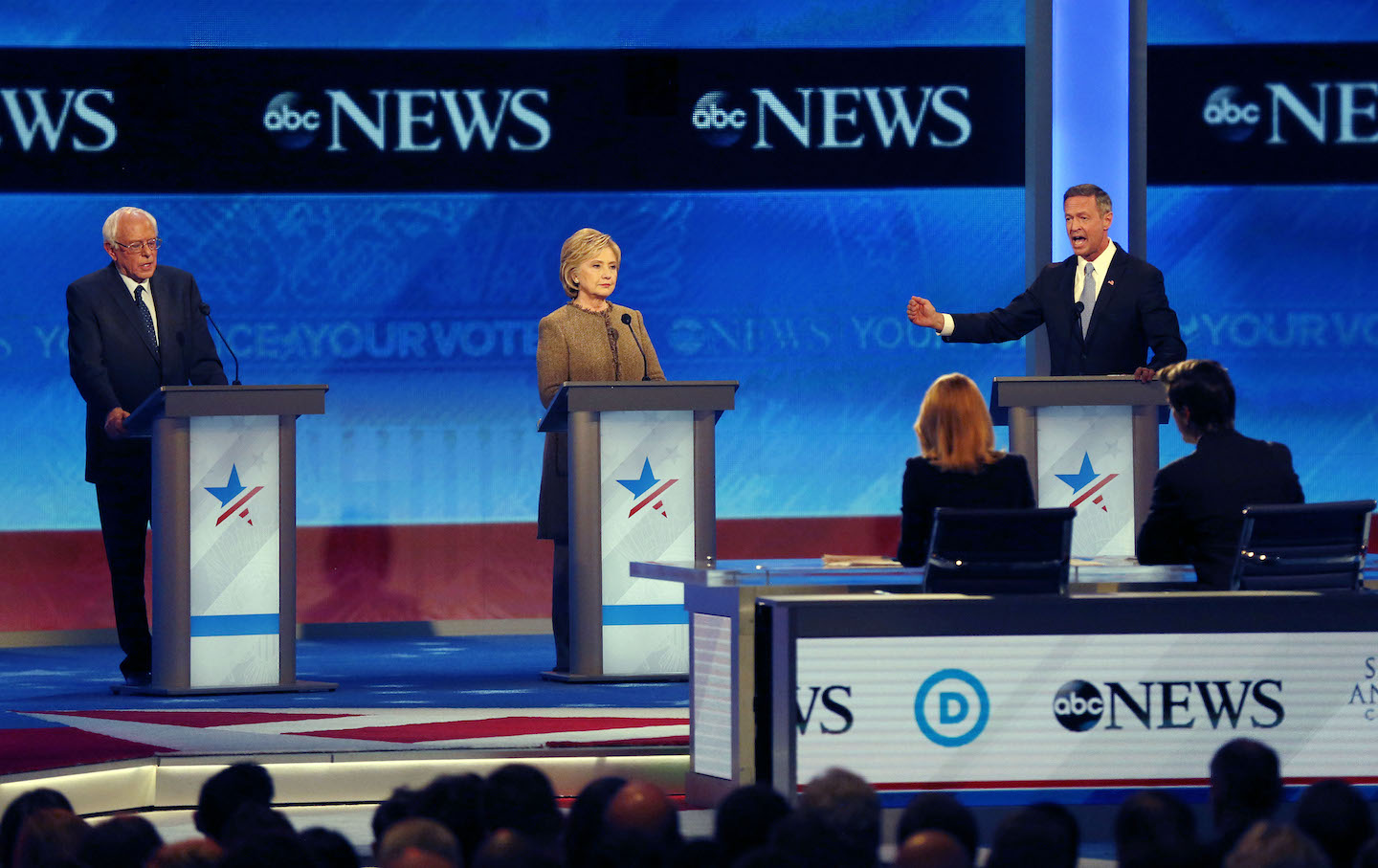
Debate is contention in argument; strife, dissension, quarrelling, controversy; especially a formal discussion of subjects in front of a public assembly or legislature, in Parliament or in any deliberative assembly.
Debate is a method of formally presenting an argument in a disciplined manner. Through logical consistency, factual accuracy and some degree of emotional appeal to the audience are elements in debating, where one side often prevails over the other party by presenting a superior "context" and/or framework of the issue. The outcome of a debate may depend upon consensus or some formal way of reaching a resolution, rather than the objective facts. In a formal debating contest, there are rules for participants to discuss and decide on differences, within a framework defining how they will interact.

Debating is carried out in debating chambers and assemblies of various types to discuss matters and to make resolutions about action to be taken, often by voting. Deliberative bodies such as parliaments, legislative assemblies, and meetings of all sorts engage in debates. In particular, in parliamentary democracies a legislature debates and decides on new laws. Formal debates between candidates for elected office, such as the leaders debates that are sometimes held in democracies. Debating is also carried out for educational and recreational purposes, usually associated with educational establishments and debating societies. The major goal of the study of debate as a method or art is to develop the ability to debate rationally from either position with equal ease.

Informal and forum debate is relatively common, shown by TV shows such as the Australian talk show, Q&A, the quality and depth of a debate improves with the knowledge and skills of its participants as debaters. The outcome of a contest may be decided by audience vote, by judges, or by some combination of the two.

Although debating in various forms has a long history, and can be traced back to the philosophical and political debates of Ancient Greece, such as Athenian democracy, modern forms of debating and the establishment of debating societies occurred during the Age of Enlightenment in the 18th century.

Debating teams are often helpful to high school students in teaching the writing process, as well as in teaching rhetoric.

Debating societies emerged in London in the early eighteenth century, and soon became a prominent fixture of national life. The origins of these societies are not certain in many cases however, by the mid-18th century, London fostered an active debating society culture. Debating topics covered a broad spectrum of topics while the debating societies allowed participants from both genders and all social backgrounds, making them an excellent example of the enlarged public sphere of the Age of Enlightenment. Debating societies were a phenomenon associated with the simultaneous rise of the public sphere, a sphere of discussion separate from traditional authorities and accessible to all people that acted as a platform for criticism and the development of new ideas and philosophy.

Friday, June 17, 2016

HOMEWORK. *Study this and the information about introspection for the test.

FIND OUT THE DEFINITION OF THE SPEECH TERMS LISTED BELOW.


  1. introduction
  2. retorical question
  3. quotation
  4. narrative
  5. link
  6. thesis statement 
  7. preview statement 
  8. body (text)
  9. outline
  10. porpuse statement
  11. subordination
  12. main heading 
  13. supporting ideas, details, materials
  14. transition words
  15. chronological pattern
  16. cause effect pattern
  17. problem solution pattern 
  18. climatic pattern. *order of inportance.
  19. spatial pattern. *depends on the physical position. 

Wednesday, June 15, 2016

INTROSPECTION TOPICS *these are ideas that you can change.


  1. How old would you be if you dont know how old you are?
  2. Whic is worse4, failing or never trying?
  3. When it is all said and done, will you have said more than you have done?
  4. What is the one thing you´d most like to change about the world?
  5. Are you doing what you believe in, or are you settling for what you are doing?
  6. To what degree have you actually controlled the course yourlife has taken?
  7. Are you more worried about doing things roght, or doing the roght things?
  8. If you could pffer a newborn child only one piece of avdive, what would it be?
  9. Would you break the law to save a loved one?
  10. Have you ever seen insanity where you later saw creativity? 

Tuesday, June 14, 2016

Oral Presentation/ Evaluation Criteria

INSTITUTO PANAMERICANO-DAVID                 NAME: ___________________________
                                                                                DATE: ___________________________
PROF. RODRIGUEZ                                                 TOTAL POINTS:       /40


CATEGORY
4
3
2
1
Preparedness
Student is completely prepared and has obviously rehearsed.
Student seems pretty prepared but might have needed a couple more rehearsals.
The student is somewhat prepared, but it is clear that rehearsal was lacking.
Student does not seem at all prepared to present.
Listens to Other Presentations
Listens intently. Does not make distracting noises or movements.
Listens intently but has one distracting noise or movement.
Sometimes does not appear to be listening but is not distracting.
Sometimes does not appear to be listening and has distracting noises or movements.
Speaks Clearly
Speaks clearly and distinctly all (100-95%) the time, and mispronounces no words.
Speaks clearly and distinctly all (100-95%) the time, but mispronounces one word.
Speaks clearly and distinctly most ( 94-85%) of the time. Mispronounces no more than one word.
Often mumbles or can not be understood OR mispronounces more than one word.
Uses Complete Sentences
Always (99-100% of time) speaks in complete sentences.
Mostly (80-98%) speaks in complete sentences.
Sometimes (70-80%) speaks in complete sentences.
Rarely speaks in complete sentences.
Posture and Eye Contact
Stands up straight, looks relaxed and confident. Establishes eye contact with everyone in the room during the presentation.
Stands up straight and establishes eye contact with everyone in the room during the presentation.
Sometimes stands up straight and establishes eye contact.
Slouches and/or does not look at people during the presentation.
Content
Shows a full understanding of the topic.
Shows a good understanding of the topic.
Shows a good understanding of parts of the topic.
Does not seem to understand the topic very well.
Collaboration with Peers
Almost always listens to, shares with, and supports the efforts of others in the group. Tries to keep people working well together.
Usually listens to, shares with, and supports the efforts of others in the group. Does not cause "waves" in the group.
Often listens to, shares with, and supports the efforts of others in the group but sometimes is not a good team member.
Rarely listens to, shares with, and supports the efforts of others in the group. Often is not a good team member.
Volume
Volume is loud enough to be heard by all audience members throughout the presentation.
Volume is loud enough to be heard by all audience members at least 90% of the time.
Volume is loud enough to be heard by all audience members at least 80% of the time.
Volume often too soft to be heard by all audience members.
Comprehension
Student is able to accurately answer almost all questions posed by classmates about the topic.
Student is able to accurately answer most questions posed by classmates about the topic.
Student is able to accurately answer a few questions posed by classmates about the topic.
Student is unable to accurately answer questions posed by classmates about the topic.
Vocabulary
Uses vocabulary appropriate for the audience. Extends audience vocabulary by defining words that might be new to most of the audience.
Uses vocabulary appropriate for the audience. Includes 1-2 words that might be new to most of the audience, but does not define them.
Uses vocabulary appropriate for the audience. Does not include any vocabulary that might be new to the audience.
Uses several (5 or more) words or phrases that are not understood by the audience.
Total Points

               /40